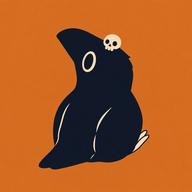
The account starts with a report people could almost place on a map: The winged figure associated with Point Pleasant whose sightings, newspaper coverage, and later retellings made a modern legend. Its force comes from the way a local detail becomes repeatable before it ever becomes fully settled. That first image gives the article its grip. The wider frame includes contemporary routines and public warnings, so the page can gather memory, rumor, symbolic force, and source limits without losing its shape.
Mothman Legend stays useful because the image of the winged figure associated with Point Pleasant whose sightings, newspaper coverage, and later retellings made a modern legend gives the article a narrow image to test against source material, motif, and reader memory. This archive version keeps the subject in larger sections so the story can breathe. The retelling lets the scene, the evidence, the variants, and the meaning build on one another, giving the page a fuller path while staying close to the material.
The Modern Trace
The Modern Trace begins with this scene: The winged figure associated with Point Pleasant whose sightings, newspaper coverage, and later retellings made a modern legend. The scene is plain enough to picture and strange enough to hold attention, because it places an ordinary trace beside something that refuses to behave like ordinary experience. In Mothman Legend: Point Pleasant, Folklore, and the Modern Creature Story, that first image matters because it gives the story a body before any explanation arrives.
Find a clear, source-aware answer about mothman legend, including the modern creature motif, the evidence limits, and the reason this modern legends subject still attracts readers. The point is not to solve the subject too quickly, but to let the first pressure stay visible. The names and images around it, including Modern Creature, Mothman, Point Pleasant, Winged Figure, and mothman legend origin, give the reader something specific to follow while the larger meaning gathers around the scene.
From that opening, the tale moves like a remembered account rather than a list of facts. The first trace creates a question, the surrounding world gives the question a place to stand, and the repeated details make the subject feel durable. That movement is what lets mothman legend become more than a title. This keeps the account atmospheric without asking for more certainty than the material can support. The reader can follow the same central pressure even as the retelling moves into wider meaning.
The System Around The Story
The System Around The Story widens the frame around the central detail. The relevant world includes contemporary routines and public warnings, and that context changes how the story feels. A small clue can seem accidental in isolation, but inside the right setting it begins to look like a sign of custom, anxiety, ritual, memory, or misread evidence. The reader can follow the same central pressure even as the retelling moves into wider meaning.
The available source frame points toward regional history, newspaper context, folklore discussion, and festival memory. That frame gives the tale a working surface: people can argue over the date, the wording, the witness, the place, or the object without losing the shape of the account. Even when the evidence is limited, the frame explains why the story could keep being told. That continuity helps the page feel like one account rather than several disconnected observations.
The setting also protects the story from becoming thin. Mothman Legend: Point Pleasant, Folklore, and the Modern Creature Story does not need a new heading for every small detail; it needs room for the place, platform, object, or mythic world to breathe. When that background is present, each later section can deepen the same central image instead of starting over. The detail remains memorable because the section keeps returning to the same source of tension.
The Detail That Went Wrong
The Detail That Went Wrong turns toward the piece of the tale that carries the most weight. In this account, the key detail can be phrased this way: the winged figure associated with Point Pleasant whose sightings, newspaper coverage, and later retellings made a modern legend. It works because it can be understood in two ways at once, as a concrete feature inside the story and as a symbol of the worry or wonder that made the story memorable.
The vocabulary around the detail is important. Words such as Modern Creature, Mothman, Point Pleasant, Winged Figure, and mothman legend origin do not decorate the page; they locate the subject in a recognizable tradition. They also keep the retelling close to the material, so the page does not drift into a general discussion that could belong to any legend. The retelling gains force from that balance between vivid image and careful source boundary.
The detail becomes stronger when the surrounding paragraphs let it change position. At first it is a clue, then a problem, then a memory, and finally a reason the tale survives. That gradual movement gives Mothman Legend: Point Pleasant, Folklore, and the Modern Creature Story a connected body, so the reader does not feel that the account is only repeating its premise. Each added angle makes the core image easier to remember rather than harder to find.
Why The Record Felt Believable
Why The Record Felt Believable is where the pressure of the story becomes clearer. Mothman Legend stays useful because the image of the winged figure associated with Point Pleasant whose sightings, newspaper coverage, and later retellings made a modern legend gives the article a narrow image to test against source material, motif, and reader memory. The subject stays interesting because the strange part is not isolated from ordinary life; it presses against ordinary habits of record keeping, belief, travel, family memory, ritual explanation, or online sharing.
Mothman Legend is a pre-existing subject in public folklore, mythology, mystery, or cultural-history discussion. That source-aware ground makes the tension more useful, not less. The tale can remain atmospheric while still admitting where evidence ends and interpretation begins. This gives the account a firmer shape than a sensational version would have. That is what lets the story remain readable even when the evidence stays partial. The account keeps its shape because the mystery, setting, and source limit remain connected.
The strongest version therefore holds two things together. It lets mothman legend keep its mystery, and it gives the reader enough surrounding detail to understand why the mystery matters. The question remains open, but it no longer feels empty. The account keeps its shape because the mystery, setting, and source limit remain connected. A reader can leave the section with both the image and the reason it mattered. The story therefore feels complete without pretending that every uncertainty has been solved.
Screens, Receipts, And Retellings
Screens, Receipts, And Retellings follows the trail of repetition. Names, locations, dates, and narrative details may shift by region, retelling, publication history, or online community. A story like Mothman Legend: Point Pleasant, Folklore, and the Modern Creature Story rarely stays fixed in one clean form. It moves through summaries, local retellings, search results, screenshots, catalog notes, mythic comparisons, or casual warnings, and each movement can change the weight of a detail.
Those changes do not necessarily weaken the tale. They show which parts people found useful enough to keep. A name may shift, a source may be simplified, or a location may become more dramatic, but the central pressure survives because it answers a real need for pattern and meaning. The story therefore feels complete without pretending that every uncertainty has been solved. That measured pace gives the subject a little more depth while leaving its atmosphere intact.
For the archive, the useful task is to show that movement without flattening it. The page can acknowledge variants while still keeping the main line visible. That balance lets the story feel alive without pretending that every version has the same evidentiary strength. That measured pace gives the subject a little more depth while leaving its atmosphere intact. The section works best when the central image stays in front and every surrounding detail supports it.
The Unease Beneath The Claim
The Unease Beneath The Claim keeps the boundary of evidence in view. The strongest reading keeps atmosphere and uncertainty visible without turning the tale into a verified report. This matters because a folklore account becomes weaker when it treats every atmospheric detail as proof. The better reading lets the mood remain, but it also makes room for uncertainty, translation, rumor, memory, and later embellishment. The section works best when the central image stays in front and every surrounding detail supports it.
The strongest reading stays within regional history, newspaper context, folklore discussion, and festival memory rather than presenting uncertain claims as confirmed fact. That kind of source boundary does not close the story; it gives the story a stable floor. The reader can still enjoy the strangeness of the premise: the winged figure associated with Point Pleasant whose sightings, newspaper coverage, and later retellings made a modern legend, but the retelling no longer asks the reader to accept more than the material can carry.
This is especially important for subjects built from records, myths, lost places, objects, and urban rumor. They often survive because the boundary is interesting. The unresolved part is not a defect in Mothman Legend: Point Pleasant, Folklore, and the Modern Creature Story; it is one reason the subject continues to invite retelling. The scene stays visible, but the surrounding context gives it more weight. This keeps the account atmospheric without asking for more certainty than the material can support.
How Later Versions Spread
How Later Versions Spread asks why the tale kept finding readers. The answer is partly emotional: Mothman Legend: Point Pleasant, Folklore, and the Modern Creature Story gives shape to a feeling that might otherwise remain scattered. It may be fear of a false record, longing for a hidden place, fascination with a sacred object, grief in a myth, or unease inside an ordinary modern scene. This keeps the account atmospheric without asking for more certainty than the material can support.
The story also lasts because its main image is easy to carry. The scene of the winged figure associated with Point Pleasant whose sightings, newspaper coverage, and later retellings made a modern legend can be remembered without remembering every source note. Once that image is in mind, the rest of the account can return through fragments: a phrase, a tag, a location, a witness pattern, or a comparison with another tradition.
That portability is why the subject belongs in an archive. It has enough structure to be recognized and enough openness to be retold. The result is not a final verdict, but a readable account of why mothman legend still has force. That continuity helps the page feel like one account rather than several disconnected observations. The detail remains memorable because the section keeps returning to the same source of tension.
Why The Legend Still Works
Why The Legend Still Works brings the story back to its clearest form. Mothman Legend: Point Pleasant, Folklore, and the Modern Creature Story is strongest when the opening image, surrounding frame, central detail, variant history, and source boundary are allowed to work together. Each part gives the next part more weight, and the whole page feels more like one connected account. The detail remains memorable because the section keeps returning to the same source of tension.
By the end, the subject does not need exaggerated certainty. It needs a coherent shape: the winged figure associated with Point Pleasant whose sightings, newspaper coverage, and later retellings made a modern legend, set inside contemporary routines and public warnings, carried by the recurring language of Modern Creature, Mothman, Point Pleasant, Winged Figure, and mothman legend origin. That shape gives the reader a complete path through the material without stripping away the uncertainty that made it interesting.
The final impression is meant to be modest but full. Mothman Legend: Point Pleasant, Folklore, and the Modern Creature Story remains a story of memory, record, belief, and interpretation, and the archive version keeps those forces in conversation. The tale is left with enough atmosphere to linger and enough structure to be useful. The retelling gains force from that balance between vivid image and careful source boundary. Each added angle makes the core image easier to remember rather than harder to find.