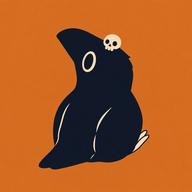
Roc begins with a giant bird large enough to carry enormous prey through ocean-voyage imagination. That image gives the reader a clear entrance before the page moves into source context, variants, and meaning.
The Detail That Defines Roc
Roc begins with a clear image: a giant bird large enough to carry enormous prey through ocean-voyage imagination. That image matters more than a category label, because it gives the reader something definite to enter before interpretation begins. The subject is not treated as a newly invented plot or a loose mood. It is handled as inherited material with a visible center, and the strongest reading starts by letting that center stay in view.
The first movement of the story is simple enough to repeat, but not so simple that it becomes thin. A reader meets a giant bird large enough to carry enormous prey through ocean-voyage imagination, then begins to notice how much pressure the image carries. The details named around it, especially Roc, Roc Myth, giant bird, travel tales, keep the account from floating into generic mystery language. They make the subject searchable, memorable, and tied to an older public shape.
That concrete opening also gives the page its pace. Instead of rushing straight into explanation, the account can linger over why this image survived. In Roc, the scene is remembered because scale is the central wonder, turning distance and sea travel into a creature with wings. The reader does not need a new twist added on top. The older material already has enough force when the visible detail is allowed to stand clearly.
The opening section therefore works like a threshold. It moves from recognition into unease, from the familiar name into the particular scene. Roc can be summarized quickly, but a useful archive version gives the summary room to breathe. It asks what the subject looks like, where it appears, who repeats it, and why the same image keeps returning in later retellings.
Once the scene is fixed, the rest of the page has a stable path. The topic can move through source context, changing versions, and later meaning without losing the thing that made it memorable in the first place. That balance is especially important here, because Roc belongs to mythic creature folklore, regional tradition, and symbolic interpretation, where a short summary often hides the texture that makes the story worth reading.
How Roc Is Usually Remembered
Roc travels through Arabic and Persian travel literature, Sindbad traditions, medieval geography, and later creature catalogues. That movement is part of the subject rather than a side note. A known story becomes durable when it can survive more than one form: a local account, a reference summary, a retelling, a warning, a symbolic reading, or an online explanation. Each form changes the pressure slightly while keeping the main image available.
Versions of Roc differ by source, region, period, or online retelling, but the central anchor remains Roc. This is why the account needs more than one paragraph of background. The variations do not have to be forced into a single perfect version. They show how the same subject was useful to different audiences, whether those audiences wanted fear, caution, wonder, local identity, moral pressure, or a memorable image that could be passed along quickly.
The source path also protects the story from becoming pure invention. References such as Wikipedia - Roc, Britannica - Roc help locate the public material, even when they do not settle every later embellishment. The point is not to pretend that every version has the same support. The point is to keep the reader aware of which details are stable, which details are interpretive, and which details belong to later retelling.
As the story moves, emphasis changes. One version may keep the setting close, another may sharpen the danger, another may focus on the figure, and another may treat the subject as a cultural symbol. Later summaries often simplify the story into a single clean form, while older or parallel versions keep more than one emphasis alive. A fuller body section can hold those differences without flattening them, because the recognizable center remains a giant bird large enough to carry enormous prey through ocean-voyage imagination.
That movement through retelling is what gives Roc its archive value. It is not only a subject to define; it is a subject to follow. The reader can see how the topic entered public memory, how later versions selected certain details, and how a compact image became strong enough to survive outside its first context.
Where Later Versions Differ
The most useful details in Roc are the ones that let the subject remain itself. Roc, Roc Myth, giant bird, travel tales are not just keywords placed for search. They are the handles a reader uses to hold the story in mind. When those details stay visible, the account has weight; when they disappear, the topic becomes interchangeable with any other strange entry.
A detail can do several kinds of work at once. It can mark a place, identify a figure, preserve a gesture, or show the emotional pressure of the story. In this case, the details circle back to a giant bird large enough to carry enormous prey through ocean-voyage imagination. They keep the account grounded in a specific remembered scene rather than a broad atmosphere of mystery, danger, or wonder.
Those details also help separate older material from later decoration. A modern retelling may add speed, drama, or a cleaner explanation, but the older recognizable pieces usually remain close to the surface. The archive reading gives those pieces priority. It does not reject later versions; it uses them carefully, after the core signs have been made clear.
This is why the body of the page has to carry real descriptive weight. If Roc is reduced to a one-line definition, the reader can identify it but not feel why it lasted. If it is turned into unsupported spectacle, the inherited shape disappears. The better path stays close to the visible material and lets the meaning grow from there.
The detail layer is also where the story becomes useful for later paths. A reader interested in Roc, Roc Myth, giant bird, travel tales can move toward nearby archive pages without losing orientation. The article works as an entry point because the details are concrete enough to connect outward, but specific enough to keep Roc from dissolving into a general category page.
What the Available Sources Show
Versions of Roc differ because retelling is not a copy machine. People keep the part that matters to them, shorten the part that feels slow, and sharpen the part that creates the strongest reaction. That process can make the story easier to share, but it can also hide the older uncertainty. The archive version keeps those changes visible instead of pretending that every account says the same thing.
The oldest recoverable shape is not always preserved in one clean source. That uncertainty does not weaken the subject. It tells the reader how to hold it. Some topics are supported by documents, some by folklore collections, some by repeated local memory, and some by internet circulation. Roc is strongest when the kind of support remains visible, because then the strange part can be read without turning speculation into false certainty.
Different versions also change the moral or emotional center. One teller may treat Roc as a warning, another as a marvel, another as a tragedy, another as a joke that became too large to ignore. The same visible anchor can serve each of those uses. That flexibility is one reason the subject remains alive in public memory.
The important boundary is between variation and replacement. A later version can add color without replacing the whole subject. A simplified summary can help readers enter the topic without becoming the final word. A dramatic retelling can reveal why people repeat the story, as long as it does not erase the older shape. Roc needs that boundary to stay readable.
For that reason, the page keeps returning to the stable center: a giant bird large enough to carry enormous prey through ocean-voyage imagination. The variations matter because they gather around that center. They do not need to be solved into one final explanation. They need to be arranged clearly enough that the reader can see what stayed the same, what changed, and why the changes mattered.
What Roc Means
Roc may be read as a story about how a creature gives shape to fear, warning, or wonder. That reading comes from the story's own materials rather than from an added lesson. The meaning is already present in the way the scene is remembered, the way the details repeat, and the way later audiences continue to find the subject useful. Roc lasts because its image can carry more than one kind of pressure.
The subject also matters because it gives readers a route into a wider shelf. Someone may arrive through Roc, then move toward related legends, myths, mysteries, places, objects, or internet folklore. That movement only works when the first page is substantial enough to feel like a real entry. A thin page can point elsewhere, but a full page gives the reader a reason to continue.
A strong closing reading does not need to exaggerate. It can say plainly that Roc is memorable because scale is the central wonder, turning distance and sea travel into a creature with wings. It can also admit that source limits remain, that later versions differ, and that the subject has been used in more than one way. That honesty makes the strange material easier to trust as an archive record.
The final value is therefore not a single answer. It is a clear path through a known subject: the central image, the source context, the recurring details, the variant forms, and the meaning those pieces create together. When those layers are all present, Roc feels like a complete article rather than a short note surrounded by navigation.
For a reader arriving from search, that completeness matters. The page has to answer the basic question, but it also has to give enough narrative movement to make the subject worth staying with. Roc can connect to other Kyunolab paths only if its own page first feels substantial: the scene is visible, the context is named, the details are repeated with purpose, and the uncertainty is handled calmly. That is how the subject becomes more than a title in a list.
It also matters for tone. A known strange story becomes weaker when every sentence only explains the label. The better rhythm lets the reader move from image to context, from context to variants, and from variants to meaning. With Roc, that rhythm keeps the page from sounding like a glossary entry. It gives the subject a beginning, a middle, and a reason to remain in the archive without pretending to settle every question.
That is the standard this repaired version uses. The body carries the substance, while Quick Answer, source note, and related links stay in their supporting roles. The reader can skim the page if needed, but the main reward sits in the article body itself, where Roc has enough room to become specific, readable, and connected to the larger Kyunolab archive.
Frequently Asked Questions
What is Roc?
Roc refers to a giant bird large enough to carry enormous prey through ocean-voyage imagination. It is handled here through Arabic and Persian travel literature, Sindbad traditions, medieval geography, and later creature catalogues.
Why is Roc remembered?
Roc remains memorable because scale is the central wonder, turning distance and sea travel into a creature with wings. The repeated details keep the subject recognizable even when later versions change emphasis.
Are all versions of Roc the same?
No. Versions differ by source, period, region, or medium, but the central image remains clear enough to follow across retellings.
Story & Source Note
Roc is treated through Arabic and Persian travel literature, Sindbad traditions, medieval geography, and later creature catalogues. References such as Wikipedia - Roc, Britannica - Roc are used for orientation, public context, and source boundaries, not as proof for every later embellished version. The page keeps the recognizable core separate from interpretation so the story can stay readable without adding unsupported invention.